Robotics and artificial intelligence (AI) are different fields. However, they can mutually benefit each other and exist together, given the right application.
Various science fiction movies have already provided multiple imaginings of how cutting-edge AI and machine learning can affect the development of robotics, from self-driving cars to robot cars and humanoids. While AI technologies are not as advanced in real life, integrating artificial intelligence into robotics has enabled robot applications to execute significant and specific tasks, especially highly monotonous and error-prone ones.
Below are some practical uses of AI robotics:
In Healthcare
Robotics can bridge the gap in healthcare where human resources fall short. They can streamline processes and contribute to a safer environment for both patients and healthcare professionals. From self-operating blood drawing machines to robotic arms used in surgical procedures, AI-powered robotic technologies can significantly enhance patient care quality.
For example, healthcare service robots can be employed to carry linens and supplies, proving particularly helpful when there's a risk of being exposed to pathogens. The problem of hospital-acquired infections is prevalent, with 1 out of every 25 patients in US hospitals diagnosed with at least one infection annually. Robots designed for cleaning and disinfection can not only minimize exposure but also aid in decreasing these infection rates.
Robotic arms are also being utilized in orthopedic and minimally invasive abdominal operations. Some practices have turned to surgical robots to assist in hip and knee replacements by integrating computer vision, 3D visualization, and data analysis to deliver more consistent outcomes.
In Manufacturing
Modern businesses are leveraging robotics and AI to enhance manufacturing procedures. From basic algorithms that instruct a robot to maneuver around a warehouse to intricate tasks requiring deep learning and advanced robotic intelligence, these applications can be divided into a wide range of categories.
For starters, robots are used in material handling operations to move heavy or delicate materials from one place to another. Basic tasks might involve transferring a component from one conveyor belt to another, while more complex tasks could involve positioning parts in a pattern that the robot must compute.
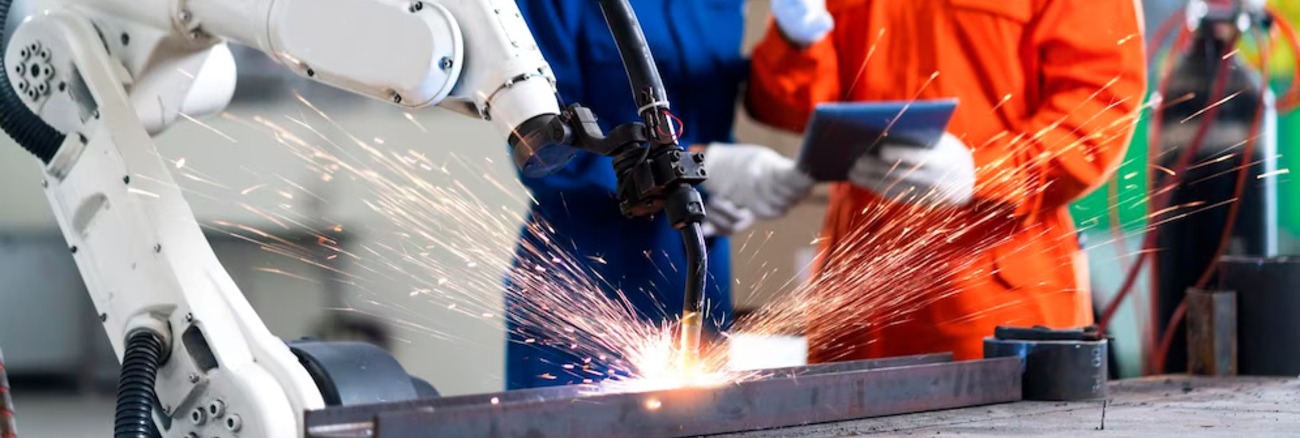
Robots are also capable of handling tools to finish tasks on the workpiece, such as spot welding, arc welding, and spray painting, among others. Moreover, the use of robots in assembly and inspection is rising due to their cost-effectiveness compared to human labor. By utilizing robots in assembly tasks, product designs can be manufactured in bulk, improving efficiency.
In Agriculture
Agricultural robotics are essential in reducing worker exhaustion, contributing to the industry's sustainability. This involves slow and monotonous tasks, such as harvesting and picking, sorting and packaging, and monitoring plant conditions like nutrients, water, and sunlight to ensure optimal plant growth. It also reduces waste and water usage by allowing the AI to learn how yield can be improved for subsequent harvests.
However, some agricultural applications may prove challenging to automate, requiring additional robotic systems to function. For example, vision systems are necessary for harvesting to allow farmers to identify optimal positions while learning the maturity levels of the produce. Robotic arms must be flexible and durable to withstand fluctuating temperatures and dust accumulation while safely picking fruits and vegetables.
In Smart Homes
Today's smart homes employ several high-tech devices relying on artificial intelligence to help homeowners manage their appliances. There are robotic cameras that can move around and look in different directions to maximize vision across multiple rooms in your house, with microphones and speakers that allow you to talk to it and get clear responses. AI-enabled drones can greatly increase security by providing real-time surveillance outside your house.
Additionally, AI-enhanced smart home devices can undergo reinforced learning to identity what you like. By analyzing your commands and behaviors, these appliances can become better at helping you over time.
The Future of AI for Robotics
AI is a branch of computer science that is slowly becoming the core of modern technologies. Its innovative applications continue to grow, allowing employees to focus on other critical tasks for better productivity and efficiency.
AI in robotics is no longer limited to the functions robots can do for humans. Through advanced neural networks, AI can learn from other devices to better understand human needs and even show problem-solving capabilities. Integrating AI and robotics is gradually leading to substantial progress in multiple industries, including healthcare, manufacturing, agriculture, and smart homes.