- What Is Fall Protection?
- Why Fall Protection Safety Matters
- Understanding Fall Protection Requirements
- Following the Hierarchy of Fall Protection
- Types of Fall Protection Systems
- Conducting a Fall Hazard Assessment
- Choosing the Right Fall Protection System
- Fall Protection Equipment Inspection and Maintenance
- Fall Protection Training
- Common Fall Protection Safety Mistakes
- Software and Tools for Managing Fall Protection Safety
- Using Technology to Improve Fall Protection
- Building an Effective Fall Protection Program
- Building a Stronger Fall Protection Safety Culture
- Conclusion
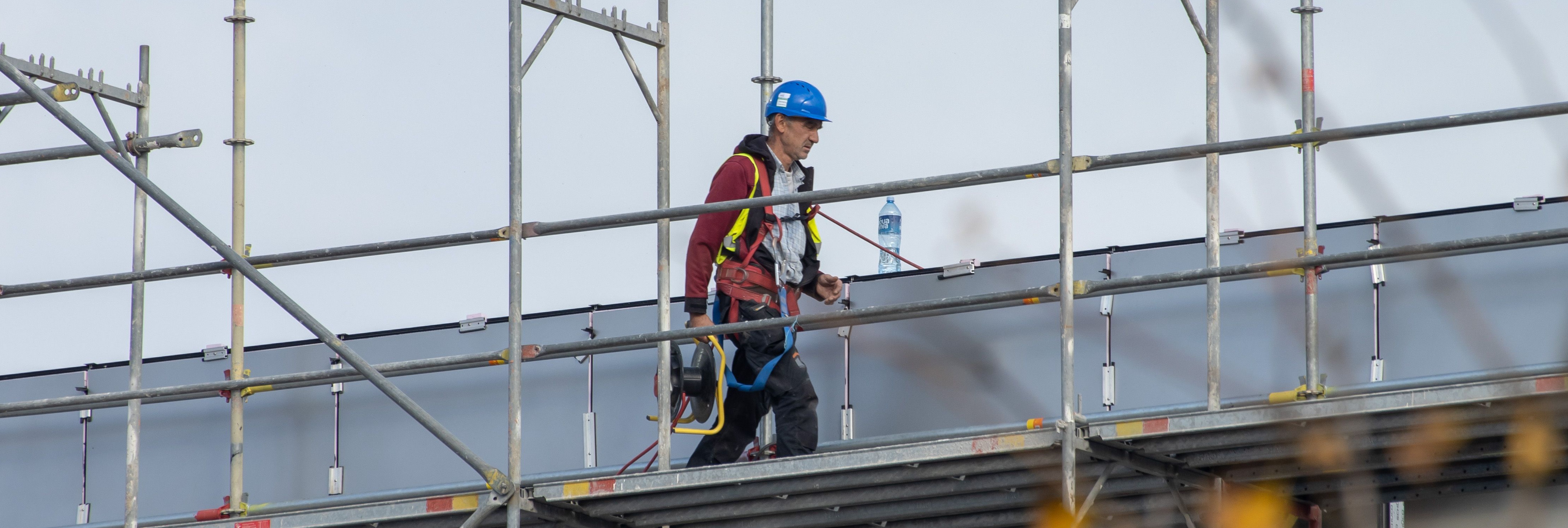
Falls are among the most serious hazards facing workers in construction, manufacturing, warehousing, utilities, facilities management, and other industries where employees perform tasks above ground level. For health and safety professionals, effective fall protection requires much more than purchasing harnesses and asking workers to tie off.
A comprehensive fall protection safety program should identify where falls can occur, eliminate hazards wherever possible, select appropriate engineering and personal protection systems, train employees, inspect equipment, and prepare for rescue situations. The objective is not simply to reduce the consequences of a fall, but to prevent workers from being exposed to the hazard in the first place.
What Is Fall Protection?
Fall protection refers to the systems, equipment, procedures, and workplace controls used to prevent employees from falling or to safely stop a fall when one occurs.
There are several approaches. Fall prevention keeps the worker away from the hazard entirely, while fall restraint prevents a worker from reaching an exposed edge. Fall arrest systems are designed to stop a worker after a fall begins.
These controls can be required around rooftops, platforms, mezzanines, floor openings, scaffolds, ladders, elevated equipment, loading areas, and other walking-working surfaces. The appropriate solution depends on the work environment, task, height, potential fall path, and applicable regulatory requirements.
Why Fall Protection Safety Matters
Falls can result in severe injuries or fatalities even when the height involved appears relatively modest. Beyond the human consequences, fall incidents can lead to work stoppages, investigations, workers' compensation claims, regulatory penalties, schedule delays, and increased insurance costs.
This is why safety leaders should avoid treating fall protection as a PPE-only issue. Harnesses and lanyards may be necessary, but they are only one component of a larger risk-control strategy.
A stronger approach examines how the work is designed, whether elevated exposure can be eliminated, what engineering controls are available, and how workers will safely perform and exit the task.
Understanding Fall Protection Requirements
In the United States, OSHA requirements vary according to industry and the type of work being performed. For general industry, OSHA generally requires protection for employees working on walking-working surfaces with unprotected sides or edges that are four feet or more above a lower level. Acceptable protection can include guardrails, safety nets, or personal fall protection systems.
Construction requirements are different. Under OSHA's construction fall protection standard, employees working on many unprotected sides and edges six feet or more above a lower level must be protected using systems such as guardrails, safety nets, or personal fall arrest systems.
Requirements may also differ for scaffolds, ladders, steel erection, specific equipment, and specialized work. OSHA-approved State Plans can have requirements that differ from or are more stringent than federal OSHA rules.
For this reason, safety professionals should determine which requirements apply to each task rather than relying on a single height threshold across the organization.
Following the Hierarchy of Fall Protection
Effective fall protection safety starts with eliminating exposure where practical.
For example, equipment that requires frequent maintenance might be relocated to ground level, inspections could sometimes be performed remotely, or work could be redesigned so employees do not need to approach an exposed edge.
When elimination is not possible, passive engineering controls such as guardrails, barriers, gates, and properly protected openings are often preferable because they do not depend on individual workers remembering to connect equipment correctly.
Fall restraint can then be considered to prevent employees from reaching a fall hazard. When workers must operate where a fall remains possible, a properly designed personal fall arrest system may be necessary.
Administrative procedures, training, warning systems, and supervision support these controls, but organizations should avoid relying on procedures alone when stronger engineering solutions are practical.
Types of Fall Protection Systems
A fall protection system should be selected according to the hazard, working environment, and activity being performed.
Guardrails provide passive protection around edges and elevated surfaces without requiring workers to connect to equipment. They are frequently suitable for permanent rooftops, platforms, walkways, and mezzanines.
Personal fall arrest systems typically consist of a body harness, anchorage, and connector. The connection may include a lanyard, lifeline, deceleration device, or combination of components. OSHA defines these elements and establishes performance requirements for personal fall protection systems used in general industry.
Fall restraint systems operate differently. Instead of stopping a worker after a fall begins, they limit movement so the worker cannot reach the exposed edge.
Horizontal and vertical lifelines can provide greater mobility in areas where workers need to move along elevated structures. These systems require careful design because factors such as anchor location, worker movement, equipment compatibility, and potential fall clearance can affect performance.
Safety nets, ladder safety systems, scaffolding protections, and controls associated with elevated work platforms may also form part of an organization's broader fall protection strategy.
Conducting a Fall Hazard Assessment
Before choosing equipment, safety teams need to understand the hazard.
A fall hazard assessment should identify both routine and non-routine tasks that place employees or contractors at height. Maintenance, cleaning, inspections, equipment repairs, construction projects, roof access, and temporary work are particularly important because some may occur infrequently and escape normal safety reviews.
Safety professionals should evaluate the working height, surface condition, edges and openings, access routes, weather or environmental factors, frequency and duration of exposure, potential fall path, and existing controls.
The assessment should then determine whether the hazard can be eliminated or whether passive protection, restraint, or fall arrest is required.
Choosing the Right Fall Protection System
Choosing a system based only on height can create significant gaps.
Safety professionals should consider the entire work situation, including anchorage, fall clearance, equipment compatibility, worker movement, potential swing falls, nearby obstructions, and how rescue would occur.
Personal systems must also be used within their design limitations. OSHA requires personal fall protection equipment to meet specific performance and compatibility criteria, including requirements for anchorages and connectors.
Complex lifeline or anchorage systems may require design or supervision from appropriately qualified personnel. Manufacturer instructions should also be incorporated into equipment selection, use, and maintenance procedures.
Fall Protection Equipment Inspection and Maintenance
Fall protection equipment cannot simply be issued and forgotten.
Workers should inspect personal fall protection equipment as required before use, looking for damage such as cuts, abrasions, deterioration, damaged hardware, distorted connectors, or other conditions that could compromise performance.
Under OSHA's construction requirements, personal fall arrest systems must be inspected before each use, and defective components must be removed from service. Equipment that has been subjected to impact loading must also be removed from service until it has been inspected and determined suitable for reuse by a competent person.
Organizations can strengthen this process by maintaining equipment inventories, inspection histories, retirement criteria, and clear procedures for isolating defective equipment.
Fall Protection Training
Even a well-designed system can fail if workers do not understand how to use it.
Training should cover how to recognize fall hazards, inspect equipment, correctly fit a harness, select approved connection points, understand equipment limitations, and follow task-specific procedures.
For construction work covered by OSHA Subpart M, employers must provide training for employees who may be exposed to fall hazards. The program must enable workers to recognize fall hazards and understand procedures for minimizing them, with training provided as necessary by a competent person.
Supervisors and safety professionals may require additional knowledge related to hazard assessments, equipment selection, inspections, contractor management, rescue procedures, and incident investigation.
Planning for Fall Rescue
A fall arrest system solves only part of the problem. Once a worker's fall has been stopped, that worker may still be suspended at height and require rapid assistance.
OSHA requires employers using personal fall arrest systems in construction to provide for prompt rescue or ensure employees can rescue themselves. General industry requirements similarly call for prompt rescue after a fall.
A rescue plan should therefore identify who will respond, what equipment is needed, how rescuers will safely reach the worker, how emergency communications will function, and whether self-rescue equipment is appropriate.
Rescue procedures should be practical for the actual worksite rather than existing only as written documents.
Common Fall Protection Safety Mistakes
Many fall protection failures come from weaknesses in planning rather than a complete absence of equipment.
Examples include selecting unsuitable anchor points, failing to account for available clearance, overlooking swing-fall hazards, using incompatible components, allowing worn equipment to remain in service, or assuming that employees understand how to use equipment after minimal training.
Other common gaps include focusing entirely on permanent employees while overlooking contractors, failing to reassess hazards when workplace layouts change, and having a fall arrest program without a workable rescue strategy.
Regular field observations and audits can help safety teams identify these issues before they result in an incident.
Software and Tools for Managing Fall Protection Safety
Digital EHS platforms cannot physically stop a fall, but they can improve how organizations manage inspections, hazards, training, corrective actions, and safety records.
SafetyCulture
SafetyCulture can support digital inspections, issue reporting, investigations, and corrective action workflows. Inspections and reported issues can be connected with actions, helping teams document hazards and track follow-up responsibilities across different sites.
For fall protection programs, organizations could use the platform to digitize equipment inspections, work-at-height assessments, rooftop inspections, and corrective action tracking.
VelocityEHS
VelocityEHS provides safety capabilities spanning incident management, inspections, observations, compliance, training, and action management. Its action management functionality allows teams to assign, track, and manage corrective and preventive actions within a centralized system.
This can help larger organizations maintain visibility over fall hazards and corrective actions across multiple departments or facilities.
CorityOne
CorityOne combines safety risk management, audits and inspections, incidents, contractor safety, corrective actions, and analytics within an enterprise EHS environment. Its inspection capabilities support standardized workflows, mobile data capture, findings, and corrective action tracking.
Organizations with multiple facilities can use these capabilities to standardize how fall hazards and inspection results are documented across operations.
Intelex EHSQ
Intelex supports workplace safety activities including observations, hazard reporting, inspections, incident management, job safety analysis, and safety analytics. Its inspection software allows teams to schedule inspections, capture findings from mobile devices, and track issues requiring resolution.
For safety leaders, centralized reporting can also make it easier to identify recurring fall protection deficiencies across departments or locations.
Using Technology to Improve Fall Protection
EHS software is only one part of the technology available to safety teams. QR codes and RFID can help track individual harnesses and other equipment, while mobile applications can simplify inspections and hazard reporting.
Wearables and connected PPE can provide additional visibility into worker conditions, while drones and remote inspection technologies may reduce the need for employees to physically access certain elevated areas.
The key is to use technology to reduce exposure and strengthen decision-making rather than treating digital tools as substitutes for proper engineering controls.
Building an Effective Fall Protection Program
A sustainable fall protection program begins by identifying every activity that exposes employees or contractors to heights. Safety teams can then assess those hazards, apply the hierarchy of controls, select appropriate systems, establish procedures, and provide task-specific training.
From there, inspection records, near misses, safety observations, training completion, equipment defects, and corrective action closure rates can provide useful leading indicators.
These measures allow safety leaders to see whether the program is working before injury statistics reveal a problem.
Building a Stronger Fall Protection Safety Culture
Fall protection is ultimately influenced by everyday behavior and organizational expectations.
Employees should feel able to stop work when fall controls are missing, damaged, or unsuitable. Supervisors should reinforce proper practices instead of allowing shortcuts to become normal, and leaders should allocate resources to eliminate hazards wherever practical.
Near misses and safety observations should also be treated as opportunities to improve the system rather than simply worker mistakes.
Conclusion
Effective fall protection requires much more than supplying workers with harnesses. Organizations need to understand where fall hazards exist, eliminate exposure wherever practical, select the appropriate fall protection system, inspect equipment, train employees, prepare for rescue, and continuously review whether existing controls remain effective.
For health and safety professionals, the strongest programs combine engineering controls, personal protection, worker involvement, reliable safety processes, and digital tools that provide visibility across the organization. When all of these elements work together, fall protection safety becomes a proactive risk-management strategy rather than simply a compliance exercise.