- What Is Predictive Maintenance?
- How Predictive Maintenance Works
- Predictive Maintenance vs. Preventive Maintenance
- Why Predictive Maintenance Matters
- Common Predictive Maintenance Challenges
- Key Predictive Maintenance Technologies
- What Is Predictive Maintenance Software?
- How to Evaluate Predictive Maintenance Software
- Types of Predictive Maintenance Tools
- Predictive Maintenance Services
- How to Build a Predictive Maintenance Program
- Predictive Maintenance Metrics to Track
- Frequently Asked Questions
- Conclusion
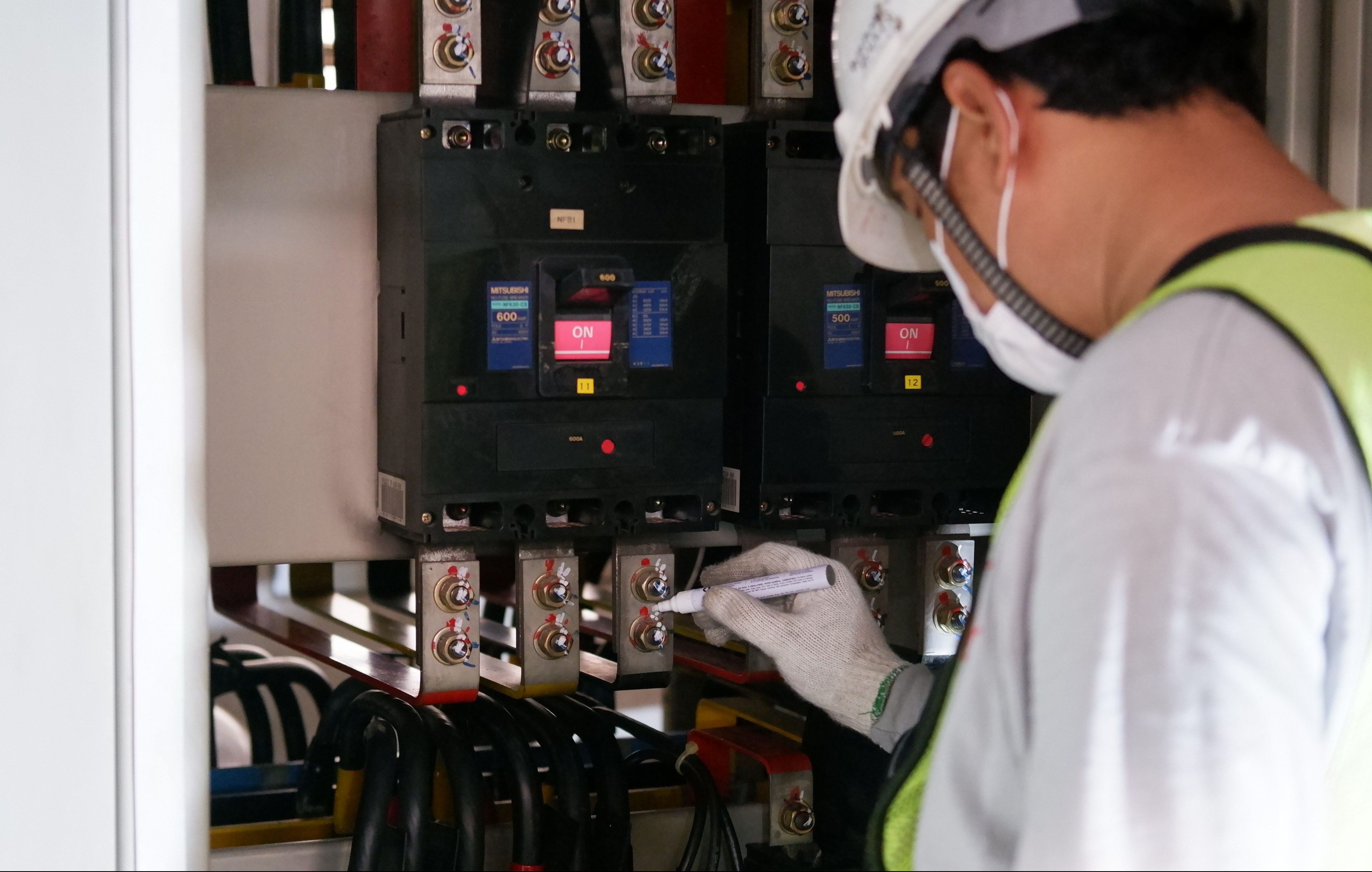
Predictive maintenance helps organizations identify equipment problems before they lead to failure. For maintenance leaders, this can mean fewer emergency repairs, less unplanned downtime, and better control over labor and spare-parts costs.
Unlike traditional maintenance approaches, predictive maintenance uses asset-condition data to determine when intervention is needed. Sensors, analytics, and predictive maintenance software help teams detect changes in equipment behavior and act before performance declines.
However, successful implementation requires more than installing sensors. Maintenance teams need clear use cases, reliable data, defined workflows, and the right mix of technology and expertise.
What Is Predictive Maintenance?
Predictive maintenance is a maintenance strategy that uses equipment data to estimate when an asset is likely to fail or require service. The goal is to perform maintenance at the right time. Work is completed before failure, but not so early that useful component life is wasted.
A predictive maintenance program may monitor vibration, temperature, pressure, electrical current, oil quality, acoustics, or other operating conditions. Analytics tools then compare this information with expected performance.
When the system detects abnormal behavior, it alerts the maintenance team. Technicians can inspect the asset, confirm the issue, and schedule corrective work.
How Predictive Maintenance Works
Most predictive maintenance programs follow a similar process.
First, the organization identifies critical assets and known failure modes. It then selects the data needed to detect those problems. Sensors or existing control systems collect equipment data. Predictive maintenance tools analyze that information for unusual patterns, threshold breaches, or signs of deterioration.
The system may generate an alert, asset-health score, or estimated time to failure. Maintenance teams then review the findings and decide whether action is required. Results from inspections and completed work orders are fed back into the system. This helps improve alert accuracy over time.
Predictive Maintenance vs. Preventive Maintenance
Preventive maintenance is based on a fixed schedule. An organization may service a machine every three months or replace a component after a set number of operating hours.
Why Predictive Maintenance Matters
The main value of predictive maintenance is greater operational control.
Reduced unplanned downtime
Early warnings allow teams to address equipment problems before they interrupt production or service delivery. Even a small increase in warning time can improve planning. A maintenance team may be able to move work to a weekend shutdown instead of stopping a production line during peak demand.
Better asset reliability
Condition data helps teams understand how equipment behaves under real operating conditions. Maintenance leaders can identify recurring faults, inefficient operating practices, and environmental factors that increase wear.
Lower maintenance costs
Predictive maintenance can reduce emergency labor, expedited shipping, contractor callouts, and unnecessary component replacement. It can also help organizations use technician time more effectively by directing attention toward assets showing measurable risk.
Longer equipment life
Small defects often become expensive failures when they are not addressed. For example, misalignment may increase vibration, damage a bearing, and eventually affect a motor or connected equipment. Detecting the original issue early can prevent wider damage.
Improved planning
Reliable asset-health information supports better workforce scheduling, spare-parts planning, and production coordination. It also gives leaders stronger evidence when deciding whether to repair, rebuild, or replace equipment.
Common Predictive Maintenance Challenges
Predictive maintenance can create significant value, but implementation is not always simple.
Incomplete asset data
Many organizations have inconsistent maintenance histories, missing asset records, and limited failure data. This makes it harder to establish baselines or train advanced prediction models. Teams should not delay all progress until their data is perfect. A focused program can begin with condition thresholds and improve as more information is collected.
Legacy equipment
Older machinery may not have built-in connectivity or accessible control-system data. Organizations may need external sensors, gateways, or manual inspection tools to monitor these assets.
Skills shortages
Predictive maintenance may require expertise in reliability engineering, vibration analysis, data interpretation, and systems integration. Some teams develop these skills internally. Others use predictive maintenance services to support implementation and analysis.
Alert fatigue
Poorly configured systems can produce too many alerts. When technicians receive frequent low-value notifications, they may begin to ignore important warnings. Alerts should be prioritized by severity, asset criticality, and operational impact.Difficulty proving value
Predictive maintenance benefits can be hard to measure if no baseline exists. Before launching a pilot, maintenance leaders should record current downtime, repair costs, failure frequency, emergency work, and asset availability.Key Predictive Maintenance Technologies
Different asset types require different monitoring methods.
Internet of Things sensors
Connected sensors collect information such as vibration, temperature, pressure, humidity, speed, and current. These sensors are useful when organizations need continuous or frequent monitoring across many assets.Vibration analysis
Vibration monitoring is commonly used for rotating equipment. Changes in vibration can indicate imbalance, misalignment, looseness, bearing wear, or mechanical defects.
Thermal monitoring
Temperature changes may reveal friction, electrical faults, cooling problems, or excessive load. Thermal cameras can support periodic inspections, while installed sensors provide continuous monitoring.
TOil analysis
Oil and lubricant analysis can identify contamination, metal particles, viscosity changes, and component wear. This method is often used for engines, gearboxes, turbines, and hydraulic systems.
TAcoustic and ultrasonic monitoring
Sound-based tools can detect compressed-air leaks, electrical discharge, friction, and other conditions that may not be visible.
Artificial intelligence and machine learning
Advanced analytics can identify patterns across large volumes of operating data. These models may detect subtle changes that fixed thresholds miss. However, their performance depends on data quality, configuration, and regular validation.
Digital twins
A digital twin is a virtual representation of an asset or system. Organizations can compare actual equipment performance with expected behavior and simulate how changing conditions may affect reliability.
What Is Predictive Maintenance Software?
Predictive maintenance software collects, analyzes, and presents information about equipment condition.
The software may receive data from sensors, control systems, computerized maintenance management systems, or industrial platforms.
Core capabilities often include:
- Real-time condition monitoring
- Anomaly detection
- Asset-health scoring
- Automated alerts
- Failure-risk estimates
- Trend analysis
- Maintenance recommendations
- Work order integration
- Reporting and performance tracking
The most effective software does more than display data. It helps maintenance teams understand which assets require attention and what action should be taken next.
How to Evaluate Predictive Maintenance Software
Maintenance leaders should evaluate software based on operational needs, not the number of features listed in a product demonstration.
Asset compatibility
The platform should support the organization’s equipment, sensor types, communication protocols, and operating environment. A tool designed for rotating machinery may not provide the same value for electrical infrastructure or mobile assets.
Integration
Predictive insights should connect with existing workflows. Integration with a CMMS, enterprise asset management platform, enterprise resource planning system, or operational technology environment can reduce manual work and improve traceability.
Analytics quality
Leaders should ask how the software identifies anomalies, builds prediction models, and measures accuracy. The system should also explain why an alert was generated. A technician needs enough context to validate the issue.
Ease of use
Technicians and planners should be able to interpret results without becoming data scientists. Clear dashboards, prioritized alerts, and practical recommendations are often more valuable than complex visualizations.
Scalability
A pilot may involve 20 assets. A mature program may cover several plants and thousands of data points. The platform should be able to scale without creating excessive configuration, licensing, or administrative costs.
Security and governance
Organizations should review access controls, data ownership, cloud architecture, encryption, retention policies, and cybersecurity requirements.
This is especially important when software connects to operational technology.
Implementation support
Strong implementation support can be as important as the product itself.
Maintenance leaders should assess sensor deployment, integration assistance, training, model configuration, and ongoing optimization.
Types of Predictive Maintenance Tools
Predictive maintenance tools vary in scope and technical depth.
Condition-monitoring tools
These tools focus on specific measurements, such as vibration, temperature, oil condition, or acoustics. Key features often include sensor connectivity, trend charts, threshold alerts, and equipment-specific diagnostics.
This category is best for organizations that need targeted monitoring for known failure modes. One watchout is that condition-monitoring tools may require integration with a CMMS or another platform to convert alerts into planned work.
AI-based predictive analytics platforms
These platforms analyze large data sets to detect abnormal behavior and estimate failure risk. Key features may include machine learning, anomaly detection, asset-health scores, pattern recognition, and model management.
They are best for organizations with complex equipment and enough operating data to support advanced analysis. One downside is that results may be difficult to trust when models are poorly explained or trained on limited data.
CMMS and EAM platforms with predictive capabilities
Some maintenance management platforms include condition monitoring, automated triggers, and predictive analytics.
Key features may include work order automation, maintenance history, labor planning, inventory management, mobile access, and asset records.
These platforms are best for teams that want predictive insights embedded in existing maintenance processes. One watchout is that their analytics may be less specialized than those offered by dedicated predictive maintenance software.
Original equipment manufacturer tools
Equipment manufacturers may offer remote monitoring or predictive services for their machines. Key features can include equipment-specific models, access to manufacturer expertise, diagnostic recommendations, and remote support.
OEM solutions are best for organizations operating a large number of similar assets from one manufacturer. A limitation is that they may not provide a unified view across mixed equipment environments.
Industrial IoT platforms
Industrial IoT platforms connect assets, manage sensor data, and support analytics across large operations.
Key features may include device management, data ingestion, edge computing, dashboards, application development, and integration tools.
They are best for enterprises building a broader connected-operations strategy. One watchout is that implementation can require substantial internal technical expertise.
Predictive Maintenance Services
Predictive maintenance services help organizations access specialist knowledge without building every capability internally.
Providers may support:
- Asset criticality assessments
- Reliability program design
- Sensor selection and installation
- Vibration or oil analysis
- Remote condition monitoring
- Predictive model development
- Software implementation
- Systems integration
- Training
- Program optimization
Managed services are useful when internal teams cannot continuously review equipment data. A provider may monitor assets remotely, investigate anomalies, and send recommendations to the maintenance team.
Consulting services are often more focused on program design and implementation. Consultants may help identify suitable assets, establish baseline metrics, select technology, and build workflows.
These services are best for organizations that need specialized expertise or faster deployment. One watchout is the risk of long-term dependence on the provider. Contracts should clearly address data ownership, response times, knowledge transfer, and service levels.
How to Build a Predictive Maintenance Program
A phased approach can reduce risk and improve adoption.
1. Define the business problem
Start with a specific operational issue. Examples include repeated motor failures, excessive production downtime, high contractor costs, or limited visibility into remote assets.
2. Prioritize critical assets
Select assets based on failure impact, repair cost, safety risk, production importance, and failure history. Not every asset requires predictive monitoring.
3. Establish baseline metrics
Document current performance before launching the program. Useful metrics include unplanned downtime, maintenance cost, failure frequency, emergency work, mean time between failures, and asset availability.
4. Select the right monitoring method
Match the technology to the failure mode. Vibration analysis may be appropriate for a motor. Oil analysis may provide more value for a gearbox. Thermal monitoring may be more useful for electrical equipment.
5. Run a focused pilot
Begin with a manageable number of assets. The pilot should be large enough to produce meaningful results, but small enough for the team to manage and refine.
6. Connect alerts to workflows
Define who reviews each alert, how it is validated, and when a work order should be created. Without a clear response process, predictive insights may not lead to action.
7. Train maintenance and operations teams
Employees should understand what the system measures and how it supports their work. Predictive maintenance should be positioned as a decision-support tool, not a replacement for technician knowledge.
8. Measure and refine
Compare results with the original baseline. Review confirmed findings, false positives, missed failures, warning time, avoided downtime, and maintenance savings.
9. Scale gradually
Expand based on proven value. Use lessons from the pilot to improve data standards, alert rules, training, and integration before adding more assets or facilities.
Predictive Maintenance Metrics to Track
Maintenance leaders should track both technical and business outcomes.
Important metrics include:
- Unplanned downtime
- Mean time between failures
- Maintenance cost per asset
- Planned versus unplanned work
- Asset availability
- Prediction accuracy
- False-positive rate
- Warning time before failure
- Avoided repair costs
- Avoided production losses
No single metric tells the full story. A program may improve reliability without immediately reducing total maintenance spending, especially during the early implementation stage.
Frequently Asked Questions
What is predictive maintenance in simple terms?
Predictive maintenance uses equipment data to detect problems before failure. It helps teams decide when maintenance is needed based on asset condition.
What is an example of predictive maintenance?
A vibration sensor detects a change in a motor’s operating pattern. Analysis indicates possible bearing wear. The maintenance team replaces the bearing during planned downtime before the motor fails.
Does predictive maintenance require artificial intelligence?
No. Basic predictive maintenance can use thresholds, trend analysis, and condition-monitoring techniques. Artificial intelligence becomes more useful when organizations need to analyze complex patterns across large amounts of data.
How much data is needed?
The amount depends on the asset, failure mode, and analytical approach. Organizations can often begin with threshold-based monitoring while collecting enough data for more advanced models.
Is predictive maintenance expensive?
Costs vary based on sensors, software, integrations, asset volume, and service requirements. A focused pilot can help determine whether the expected reduction in downtime and repair costs justifies broader investment.
Which assets should be monitored first?
Start with assets that are critical to operations, expensive to repair, prone to failure, or responsible for significant production losses.
Conclusion
Predictive maintenance is not simply a software purchase. It is a reliability strategy that combines equipment data, maintenance expertise, technology, and operational discipline.
The strongest programs begin with clear business problems and critical assets. They use appropriate monitoring methods, connect alerts to maintenance workflows, and measure results against defined baselines.
For maintenance leaders, the goal is not to predict every failure. It is to create enough warning to make better decisions, reduce operational disruption, and improve asset performance over time.