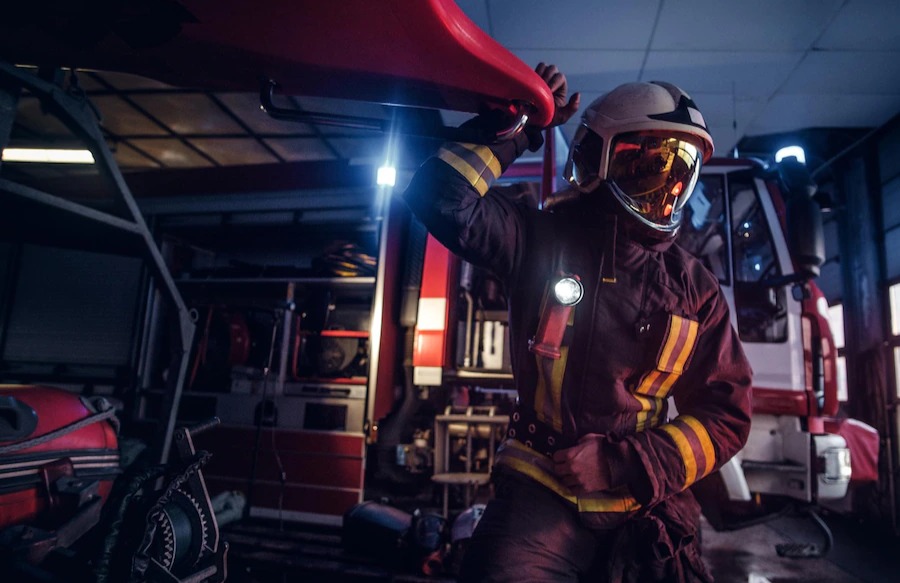
Firefighters face several dangers in their daily processes. From rescuing kittens stuck in trees to rushing into burning buildings, these brave rescuers risk getting injuries to help others.
Fortunately, modern technologies are making firefighting operations safer and more manageable. Fire departments across the country are using the latest innovations to improve response times and communications, support firefighter safety during emergencies, and reduce operational costs.
Here are some firefighter technologies that are transforming how firefighters do their jobs:
Stronger Helmets
Traditional helmets were made from leather, metal, and pressed fiber construction. Nowadays, companies have advanced composite technology to design stronger helmets for improved safety and performance.
Fire helmets equipped with face shields and goggles are ideal for firefighting conditions. Producing them with high-performance material that can resist extreme temperatures can help firefighters stay inside burning buildings longer.
Drone Support
Drones are growing increasingly popular due to their many uses. These unmanned aerial vehicles (UAVs) can be weaponized for military functions, fitted with high-tech cameras for photography and filming, or modified to deliver goods.
Departments concerned with public safety, such as local police, fire, and emergency service units, utilize drones for surveillance in dangerous situations to keep their officers safe.
For instance, in the fire department, drones can assess firegrounds by gathering vital information on the scene of the incident, reducing firefighter risk and helping officers make better decisions on how to handle the situation.
Moreover, drones are highly effective for search and rescue operations. Due to their size and speed, they can quickly scan large areas and places firefighters can't reach. Drones can also deliver essentials like food, water, and first aid kits to people trapped in inaccessible locations.
Thermal Imaging Developments
Thermal imaging cameras have helped firefighters perform their duties for over decades. As thermal imaging technology evolves, more firefighter functions are simplified and made more efficient.
Firefighters use thermal imaging to scan for people during rescues while identifying the fire source. It also allows them to locate windows, hose lines, and areas unaffected by fire to improve self-survivability.
Modern thermal imaging solutions have higher accuracies and are easier to handle. Some companies have manufactured cameras that can be attached to firefighter helmets so that they can use their hands for more critical tasks.
Sustainable Trucks
The threat of climate change is causing people to find cleaner vehicles for reduced emissions. Fire departments have also sought greener alternatives, with some stations deploying electric fire trucks to minimize fuel consumption, carbon emissions, and noise.
However, not all departments can afford electric fleets. To lessen the environmental impact of their diesel-dependent trucks, some fire responders apply magnetic oil filter pads on their existing disposable oil filters.
Magnetic filter pads can significantly extend oil life, ensuring fire trucks can reach their target locations without delays. The pads also remove contaminants from the fuel and convert it into increased mileage while reducing harmful emissions.
Technology Protects Firefighters
Technology is an integral part of our lives and is essential in every profession. Firefighters, who constantly risk their lives to save people in their hour of need, must not be left out of technological advancements. The application of advanced firefighting technologies makes their operations significantly safer and more sustainable.