- What Is Warehouse Automation?
- Core Components of an Automated Warehouse
- How Warehouse Automation Fits into Modern Manufacturing
- Why Manufacturing Leaders Are Investing in Warehouse Automation
- Key Types of Warehouse Automation Solutions
- How to Evaluate Warehouse Automation Solutions
- Leading Warehouse Automation Solutions for Manufacturers
- Implementation Challenges in Warehouse Automation
- The Future of the Automated Warehouse
- Conclusion
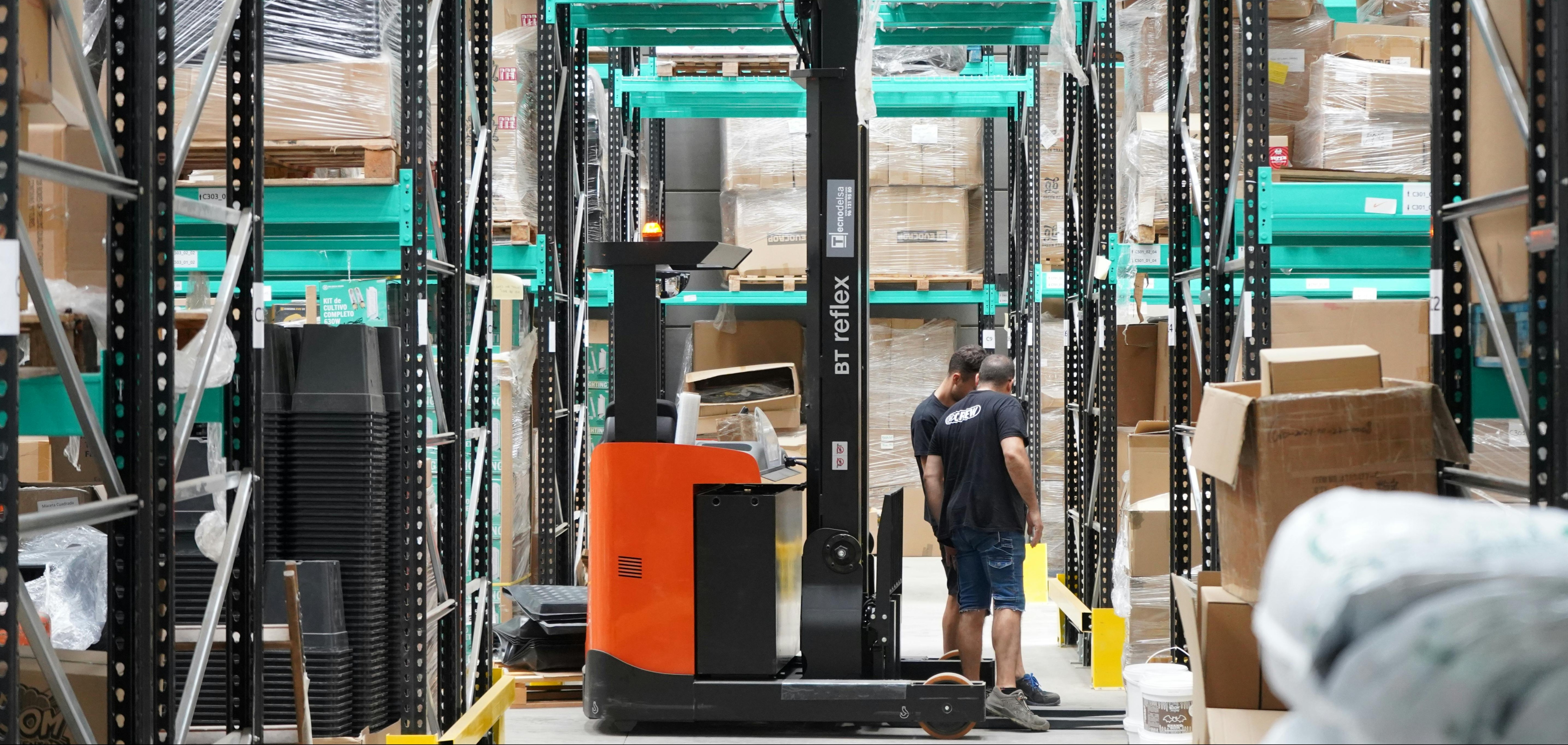
Manufacturers are under increasing pressure to move products faster while maintaining tight cost control. Labor shortages, supply chain disruptions, and unpredictable demand cycles are pushing operations leaders to rethink warehouse operations. Traditional manual warehouses struggle to keep up with these demands.
Warehouse automation is becoming a strategic capability for modern manufacturing organizations. Instead of relying heavily on manual picking and material movement, an automated warehouse uses robotics, intelligent software, and connected systems to streamline operations.
For manufacturing leaders, the question is no longer whether automation will reshape warehouse operations. The real question is how to evaluate warehouse automation solutions and deploy them in a way that improves efficiency, accuracy, and scalability.
What Is Warehouse Automation?
Warehouse automation refers to the use of technology to automate the movement, storage, and management of goods within a warehouse. These technologies reduce manual tasks and improve operational efficiency.
In a traditional warehouse, workers perform most tasks manually. They pick items, move pallets, track inventory, and update systems. An automated warehouse replaces many of these repetitive tasks with robotics, automated systems, and software-driven workflows.
The goal is not to eliminate human workers entirely. Instead, automation reduces repetitive tasks so employees can focus on higher value work such as supervision, exception handling, and process optimization.
Core Components of an Automated Warehouse
Several technologies typically work together in a warehouse automation environment.
- Robotics systems move goods between storage locations and picking stations. Autonomous mobile robots and robotic arms are commonly used.
- Automated storage and retrieval systems store products in dense vertical structures and retrieve them quickly when needed.
- Conveyor and sortation systems move products efficiently through the facility.
- Warehouse management systems coordinate inventory tracking, order processing, and equipment operations.
- Advanced analytics and artificial intelligence improve routing, forecasting, and operational optimization.
These components work together to create a coordinated flow of goods across the warehouse.
How Warehouse Automation Fits into Modern Manufacturing
Warehouse automation is closely connected to manufacturing operations. In many facilities, warehouses support production lines and supply finished goods to distribution networks.
Automated warehouse systems can integrate with manufacturing execution systems and enterprise resource planning platforms. This integration improves visibility across production and inventory.
For example, when production schedules change, warehouse systems can automatically adjust inventory movements. This helps manufacturers maintain lean inventory strategies and support just in time production models.
Why Manufacturing Leaders Are Investing in Warehouse Automation
Several operational challenges are driving increased investment in automation.
Manufacturers deal with workforce constraints, rising logistics complexity, and growing expectations for faster fulfillment. Warehouse automation solutions help organizations address these pressures while maintaining operational resilience.
Labor Shortages and Workforce Constraints
Many manufacturing regions face persistent labor shortages in warehouse and logistics roles. Hiring and retaining warehouse workers has become increasingly difficult.
Automation helps reduce reliance on manual labor for repetitive tasks such as picking, sorting, and transporting goods. Instead of replacing workers, automation often shifts employees into supervisory and technical roles.
This change can improve job quality while maintaining operational productivity.
Throughput, Accuracy, and Inventory Visibility
Manual warehouses are prone to errors and delays. Misplaced items, inaccurate counts, and inefficient picking routes can reduce operational performance.
Warehouse automation solutions improve accuracy through system-controlled processes. Robotics systems follow optimized routes and automated scanning ensures inventory data remains accurate.
These improvements increase throughput and reduce costly fulfillment errors.
Scalability for Demand Volatility
Manufacturers often face large demand swings. Seasonal demand, product launches, and supply disruptions can place stress on warehouse operations.
Automation provides more scalable capacity. Robotics systems can run extended hours and handle higher volumes without proportional increases in labor costs.
This scalability allows organizations to respond more effectively to changing market conditions.
Key Types of Warehouse Automation Solutions
Warehouse automation solutions come in several categories. Each technology addresses different operational challenges and facility requirements.
Automated Storage and Retrieval Systems (AS/RS)
AS/RS systems store products in high density storage structures and retrieve them automatically when needed.
These systems use cranes, shuttles, or robotic systems to move items between storage locations and picking stations. By maximizing vertical space, AS/RS solutions can significantly increase warehouse storage capacity.
They are commonly used in high volume manufacturing environments where consistent inventory flow is critical.
Autonomous Mobile Robots (AMRs)
Autonomous mobile robots move goods throughout a warehouse without fixed infrastructure. Unlike traditional conveyor systems, AMRs navigate dynamically using sensors and mapping software.
These robots are especially useful in existing warehouses where installing fixed infrastructure may be difficult or expensive.
AMRs typically support picking operations by transporting items between workers and storage areas.
Conveyor and Sortation Systems
Conveyor systems move products continuously through warehouses and distribution centers. Sortation systems automatically direct items to the correct destinations.
These systems are widely used in large facilities that handle high order volumes.
Although conveyors require significant infrastructure, they provide extremely reliable and fast material movement.
AI Powered Warehouse Management Systems
Modern warehouse management systems play a central role in automation environments.
These platforms coordinate robotics, inventory tracking, and order fulfillment processes. They also provide real time visibility into warehouse operations.
AI driven capabilities allow these systems to optimize picking routes, predict demand patterns, and identify operational bottlenecks.
How to Evaluate Warehouse Automation Solutions
Choosing the right automation strategy requires careful evaluation. Manufacturing leaders must consider operational requirements, facility constraints, and long term scalability.
Operational Complexity and Facility Layout
Warehouse size, layout, and SKU complexity all influence automation decisions.
Facilities with large product catalogs and complex picking processes may benefit from robotic picking systems or AMRs. High volume operations with predictable workflows may benefit more from conveyor based systems.
Understanding operational complexity helps leaders select the most appropriate technology.
Integration with Existing Manufacturing Systems
Automation systems must integrate with existing enterprise platforms.
Warehouse systems often connect with ERP platforms, manufacturing execution systems, and supply chain management tools. Strong integration ensures real time data flow between production and inventory operations.
Without integration, automation investments may create data silos that limit operational visibility.
Total Cost of Ownership and ROI
Automation investments involve significant upfront costs. However, evaluating only initial capital expenses can lead to incomplete decisions.
Manufacturing leaders should assess the total cost of ownership. This includes installation costs, software licensing, maintenance, and system upgrades.
At the same time, leaders should evaluate long term benefits such as labor savings, reduced errors, and improved throughput.
Leading Warehouse Automation Solutions for Manufacturers
A number of technology providers offer advanced warehouse automation solutions designed for manufacturing environments.
AutoStore
AutoStore is a robotic storage system that uses a grid-based design to store inventory in compact bins. Robots move across the grid and retrieve items as needed.
Key features include high storage density, modular scalability, and rapid goods retrieval. The system is designed to maximize vertical space and improve picking efficiency.
This solution is best for manufacturers that need to optimize storage capacity in limited warehouse space. One limitation is that the system requires specialized infrastructure and may not be suitable for facilities with highly i0rregular product sizes.
Locus Robotics
Locus Robotics provides autonomous mobile robots designed to assist warehouse workers during picking operations.
The robots guide workers through optimized picking routes and transport items across the warehouse. This approach improves productivity while reducing walking distance for employees.
Locus Robotics is best for organizations seeking flexible automation that can be deployed in existing facilities. A potential drawback is that the system still relies on human pickers, which means labor availability remains a factor.
Dematic
Dematic offers a comprehensive portfolio of warehouse automation technologies. These include robotics, conveyor systems, automated storage solutions, and warehouse software platforms.
The company specializes in large scale integrated systems for complex distribution and manufacturing environments.
Dematic is best suited for large manufacturers that require fully integrated automation across multiple warehouse processes. Implementation projects can be complex and may require significant planning and facility modification.
GreyOrange
GreyOrange focuses on robotic automation for fulfillment and distribution centers. Its systems combine robotics, AI software, and inventory orchestration.
The platform supports automated picking, goods to person workflows, and real time warehouse optimization.
GreyOrange is best for manufacturers seeking advanced robotics and intelligent orchestration capabilities. However, organizations may need strong internal IT capabilities to manage and integrate the platform effectively.
Swisslog
Swisslog provides warehouse automation solutions that combine robotics, automated storage systems, and intelligent software platforms.
Its systems are commonly used in manufacturing, retail distribution, and healthcare logistics environments.
Swisslog is best for manufacturers that want end-to-end automation solutions with strong system integration capabilities. One potential challenge is that implementation timelines can be longer due to the complexity of large automation projects.
Implementation Challenges in Warehouse Automation
Despite its benefits, warehouse automation introduces several implementation challenges.
Change Management and Workforce Adoption
Automation often changes the roles of warehouse employees. Workers may need to transition from manual tasks to supervisory or technical responsibilities. Clear communication and training programs are essential for successful adoption. Organizations that involve employees early in the automation process often see smoother transitions.
System Integration Complexity
Warehouse automation requires coordination between multiple systems. Robotics platforms, warehouse management systems, and enterprise software must all communicate effectively.
Integration challenges can delay implementation if not carefully planned. Working with experienced integration partners can reduce these risks.
Facility Retrofitting and Infrastructure Constraints
Many warehouses were not originally designed for automation.
Retrofitting existing facilities may require layout changes, infrastructure upgrades, and equipment installation. These changes can increase project complexity and cost. Early facility assessments help organizations identify potential constraints before implementation begins.
The Future of the Automated Warehouse
Warehouse automation is continuing to evolve rapidly. Advances in robotics, artificial intelligence, and data analytics are enabling more adaptive and intelligent systems.
Future automated warehouse environments will likely feature collaborative robots working alongside human employees. AI driven orchestration platforms will dynamically adjust operations based on real time demand signals.
For manufacturing organizations, warehouse automation is becoming a competitive differentiator. Companies that successfully integrate automation into their supply chain operations can improve resilience, efficiency, and responsiveness.
Conclusion
Warehouse automation is transforming how manufacturers manage inventory and fulfill orders. By combining robotics, intelligent software, and integrated systems, organizations can build warehouses that operate with greater efficiency and accuracy.
However, successful automation requires more than technology investment. Manufacturing leaders must carefully evaluate warehouse automation solutions, align them with operational needs, and manage the organizational changes that follow.
When implemented strategically, an automated warehouse can become a powerful foundation for scalable and resilient manufacturing operations.